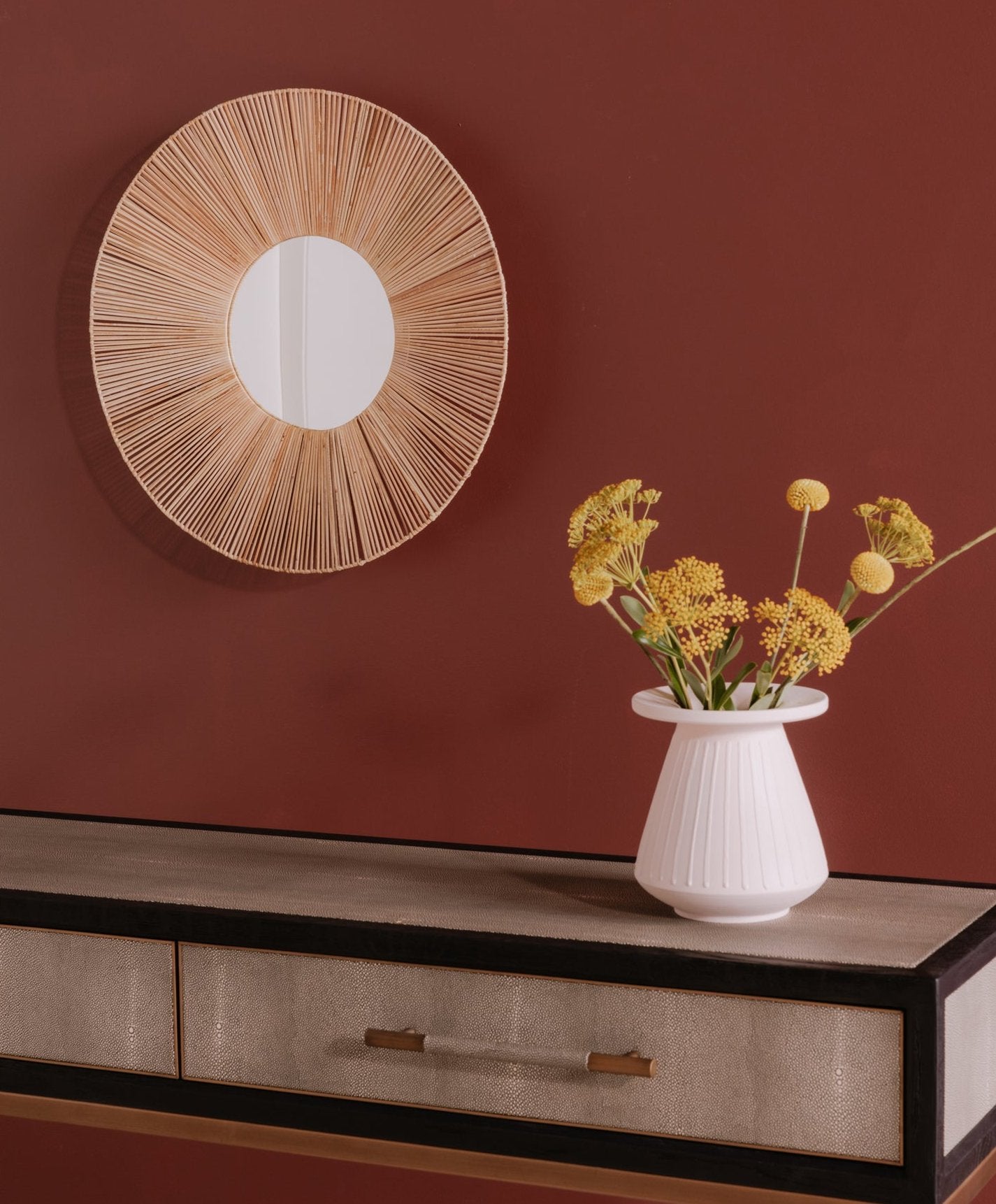


Have you ever walked into a room and felt like the walls were closing in? Maybe your living room feels dark even on sunny days, or your bedroom seems smaller than it should. Here's some good news: you don't need to knock down walls or add expensive skylights.
A simple mirror can change everything. According to interior design experts at Apartment Therapy, mirrors are the cheapest way to brighten up a dark room or give the sense of more square footage. The trick is knowing how to use them right.
These mirror ideas work like magic because they bounce light around and fool your eyes into thinking a space goes on forever. Let's start with the basics of why this simple trick works so well.
Key Takeaways
The best way to make your space feel brighter and bigger is to place a large mirror directly across from a window. This position catches natural light and reflects it throughout the room, instantly making the space feel more open.
Other smart spots include near doorways, beside lamps, and in dark corners. Choose one large mirror over several small ones, and make sure it reflects something pretty like a window view or nice artwork. Round mirrors soften small spaces, while tall rectangular mirrors make ceilings look higher.
|
What to Do |
Why It Works |
Best Room |
|
Place mirror opposite window |
Doubles natural light, creates depth |
Any room with windows |
|
Choose one large mirror |
More impact than many small ones |
Living room, bedroom |
|
Hang at eye level (5 feet high) |
Practical and looks balanced |
All rooms |
|
Use round mirrors in tight spaces |
Softens corners, feels less cramped |
Bathrooms, hallways |
|
Reflect pretty things, not clutter |
Makes room feel twice as nice |
Everywhere |
|
Lean big mirrors on floor |
Adds height, easy to move around |
Bedrooms, living rooms |
Why Mirrors Make Rooms Look Bigger
Your brain is easy to trick, and mirrors know exactly how to do it. When you look at a mirror on the wall, your eyes see the reflection and think the room keeps going. It's like looking through a window into another space.
Think about the last time you saw two mirrors facing each other. The reflections went on forever, right? That's the same idea we're using here, just in a smarter way.
Here's what happens when you put a mirror on your wall:
-
Your room appears to double in size because the reflection looks like more space
-
The walls seem farther away than they really are
-
Dark corners get pushed back and feel less closed in
-
The ceiling can look taller if you position the mirror right
-
Narrow hallways suddenly feel wider and more welcoming
The best part? This trick works in every room. A tiny bathroom can feel like a spa. A cramped bedroom can breathe.
Small apartments and tiny homes use this trick all the time. Walk into any well-designed small space and you'll spot mirrors doing their job. Designers know this secret, and now you do too.
The Secret Power of Light Reflection
Light is everything when it comes to making a room feel good. A bright room feels bigger, cleaner, and more cheerful. A dark room feels small and cramped.
Mirrors are like light catchers. They grab sunlight from your windows and toss it around the room. Picture a beam of sunlight coming through your window—it hits the wall and stops there.
But put a mirror on that wall, and suddenly that sunlight bounces back across the room. Now you've got light in two places instead of one. That's free brightness with zero extra electricity.
Here's why decorative mirror pieces work so well for light:
-
Glass reflects about 80-90% of the light that hits it
-
Shiny surfaces spread light in different directions
-
Even indirect light gets bounced around the room
-
Morning sun can light up your space all day with the right mirror
-
Night time lamps work twice as hard when mirrors help them
The color of your walls matters too. Light walls plus mirrors equal maximum brightness. Dark walls absorb light, so mirrors help fight back against that.
Windows on just one side of your room? A mirror can bring that window light to the far side of the room. Your dark corner gets to join the party.
Finding the Perfect Spot for Your Mirror
You can't just slap a mirror anywhere and expect magic. The spot you pick makes all the difference between "wow" and "whatever." Think of your mirror as a light collector.
Start by looking at your room during the daytime. Where does the sunlight hit? That's your first clue.
Walk around your space and notice the dark spots too. Those corners that always seem gloomy need help. Check what's on your walls right now—do you have artwork you love or a nice view through your window?
Your mirror should reflect these good things. Don't put a mirror where it shows your pile of mail or your overflowing laundry basket. Nobody wants to see clutter twice.
Bathroom big mirror ideas start with the sink area, but don't stop there. If you've got a window in your bathroom, put a mirror where it can catch that light. Small bathrooms feel twice as big when you use a mirror that covers most of the wall above your sink.
Key spots to consider:
-
The wall directly across from your biggest window (the number one best spot)
-
Next to floor lamps or table lamps
-
Above furniture like dressers or console tables
-
At the end of hallways to push back the walls
-
In corners that always feel dark and forgotten
-
Near your front door for last-minute outfit checks
The height you hang your mirror matters too. Eye level works best for most rooms—about five feet from the floor to the middle of your mirror. Too high and you're just reflecting the ceiling.
Smart Ways to Place Mirrors for Maximum Space and Light
Let's get into the real tricks that designers use every single day. These aren't complicated moves. You just need to know where to put your mirror and why it works.
Put a Mirror Across From Your Window
This is the golden rule of mirror placement. Find your window and put a mirror on the wall facing it. The mirror catches all that outdoor light and throws it back into your room.
You don't need the mirror to be exactly centered on the window. Close enough works fine. Even on cloudy days, this position helps.
Mirror ideas for living room spaces often start here. Living rooms usually have big windows, so you've got lots of light to work with. A large mirror opposite that window makes your living room feel twice as bright and way more spacious.
Hang Mirrors Near Light Sources
Your lamps and light fixtures are working hard to brighten your space. Help them out by putting mirrors nearby. The reflection multiplies the light.
This works great with chandeliers in dining rooms, table lamps in bedrooms, pendant lights in kitchens, wall sconces in hallways, and floor lamps in living rooms. The mirror catches the glow and spreads it farther.
Rooms without windows especially need this trick. You might not have sunshine, but you can make the most of every bulb.
Use Mirrors in Dark Corners
Every room has that one corner that never gets enough light. Instead of giving up on that space, put a mirror there. The reflection opens it up and pulls light into the darkness.
Corner mirrors work especially well when you lean them against the wall instead of hanging them. A tall mirror in a corner makes your ceiling look higher and your walls look farther apart.
Place Mirrors Opposite Doorways
When you walk into a room and see a mirror straight ahead, your brain thinks the space keeps going. The doorway leads to more room beyond. This instant illusion makes your whole space feel bigger the second you step inside.
Entryways and hallways love this trick. These spaces are usually narrow, so any help you can give them counts.
Lean Large Mirrors Against the Wall
Not every mirror needs to hang on the wall. Leaning a big mirror against your wall creates a relaxed, designer vibe. It also makes your room feel taller because the mirror sits on the floor and stretches up.
This is one of the easiest mirror ideas to try because you don't need to drill holes or find studs. Just lean and done. You can move it around until you find the perfect spot.
Big floor mirrors work great next to your bed as a statement piece, in living room corners for added depth, behind chairs or side tables for interest, and near windows to catch extra light. Just anchor them to the wall with furniture straps if you have kids or pets.
Best Mirror Styles and Shapes for Small Spaces
Not all mirrors are created equal. The shape and style you pick can make a huge difference in how well your mirror works. Let's talk about what shapes do what.
Large Mirrors Beat Small Mirrors Every Time
Here's a mistake people make: they buy a bunch of small mirrors and group them together, hoping for that bigger-room feeling. But one large mirror almost always works better.
A single big mirror creates one strong reflection that really opens up your space. Small mirrors scattered around just look busy and don't have the same power. If you want your room to feel bigger and brighter, go large.
A three-foot round mirror or a four-foot tall rectangular mirror makes way more impact than five little mirrors lined up. Think of it like this: would you rather have one big window or five tiny windows?
Round Mirrors Soften Tight Spaces
Rooms with lots of corners and straight lines can feel boxy and cramped. Round mirrors fix this problem. The curved shape softens everything and makes tight spaces feel friendlier.
Bathrooms love round mirrors because bathrooms tend to be small and full of hard edges. Narrow hallways benefit from round mirrors too—the circle shape tricks your eye into thinking the space is wider.
Round mirrors work in any style home. Modern, traditional, farmhouse, fancy—they all look good with a circle mirror. Just make sure your round mirror is big enough to make a statement.
Tall Rectangular Mirrors Add Height
Want your ceiling to look higher? Hang a tall, skinny rectangular mirror on your wall. The vertical lines draw your eyes up and make the whole room feel taller.
This trick works great in rooms with low ceilings or spaces that feel squished. Bedrooms with standard eight-foot ceilings suddenly feel more open with a vertical mirror.
These mirrors also work as full-length mirrors, so you can check your outfit while making your room look better. Hang them near closets or dressing areas for maximum usefulness.
Frameless Mirrors Maximize Light
Frames are pretty, but they also block some of your mirror's surface. Choosing a luxury mirror sometimes means going frameless for that sleek, modern look that lets maximum light reflect back into your room.
Frameless mirrors are just pure reflection with nothing in the way. They work especially well in bathrooms and modern spaces. The clean edges give you more actual mirror to work with.
Less frame means more light-catching surface. These mirrors often cost less too, so your budget gets more bang for its buck. They blend into any wall color and don't compete with your other decor.
Arched Mirrors Bring Elegant Style
Arched mirrors are having a major moment right now. The curved top adds architectural interest while still making your room feel bigger and brighter.
These mirrors work especially well above fireplaces, in entryways, and over dressers. The arch shape draws your eye upward, which makes ceilings feel higher. But unlike tall rectangular mirrors, arched mirrors feel softer and more elegant.
They fit in traditional homes but also work in modern spaces. The shape is classic enough to never go out of style.
Room-by-Room Mirror Ideas That Work
Different rooms need different mirror strategies. What works in your bathroom might not work in your bedroom. Let's go through each space.
Living Room Mirror Tricks
Your living room is usually the biggest room in your home, so you've got some flexibility here. The classic move is putting a mirror above your fireplace or sofa. This creates a focal point and reflects light from your windows across the room.
Mirror ideas for living room spaces also include leaning a huge mirror in the corner. This casual look feels designer-fancy but takes zero installation skills. Console tables love having mirrors above them—the reflection shows off whatever pretty things you put on the table.
Living rooms with windows on one side really benefit from mirrors on the opposite wall. That far corner gets dark, so send some window light over there with a well-placed mirror.
Bedroom Mirror Solutions
Bedrooms need mirrors for getting dressed, but they also need to feel calm and restful. Full-length mirrors work great near your closet. You can check your whole outfit and the mirror makes your bedroom feel more spacious at the same time.
Leaning a big mirror in the corner creates drama without overwhelming your sleep space. Some people worry about mirrors facing the bed—if that bothers you, just angle your mirror so it doesn't directly reflect your bed.
Mirrors above dressers work perfectly for both function and style. You get a place to check your hair and jewelry while making your room feel bigger.
Bathroom Brightness Boosters
Bathrooms often have the smallest windows or no windows at all. They need all the help they can get. Bathroom big mirror ideas usually start with covering most of the wall above your sink.
Go as large as you can fit. The bigger the mirror, the bigger your bathroom feels. If you have two sinks, you can use one large mirror across both or two matching mirrors for symmetry.
If your bathroom has a window, put your mirror where it catches that natural light. Adding lights on either side of your mirror multiplies the brightness even more.
Kitchen and Dining Room Ideas
Kitchens don't always get mirrors, but they should. A mirrored backsplash behind your stove or sink reflects light beautifully and makes your kitchen feel twice as big.
Dining rooms love mirrors because they reflect your chandelier and make dinner parties feel more special. The classic spot is on the wall your dining table faces. Your guests see the reflection behind you, which makes the room feel grander.
Decorative mirror collections work well in dining rooms too. You can group three to five mirrors together for a gallery wall effect. Just make sure your mirrors reflect something pretty, not your kitchen mess through the doorway.
Hallway and Entryway Fixes
Hallways are usually narrow, dark, and boring. Mirrors fix all three problems. A mirror at the end of your hallway makes it feel twice as long and much brighter.
Entryways need mirrors for practical reasons—you want to check yourself before leaving the house. But that mirror also makes your entrance feel more welcoming. Guests walk in and the space feels open and bright instead of cramped.
Round mirrors work especially well in tight entryways because they soften all those straight walls. And if you've got a really narrow hallway, put mirrors on the long wall to make it feel wider.
Creative Mirror Arrangements for Extra Impact
Ready to get fancy? These ideas take your mirrors beyond basic and into designer territory.
Create a Mirror Gallery Wall
Gallery walls usually have photos or artwork, but why not use mirrors instead? Group three to five mirrors together on one wall for serious impact.
The key is keeping something similar about all of them—maybe the frames are all gold, or all the mirrors are round, or they're all antique-looking. Mix different sizes for interest.
The collection reflects light from different angles, which brightens your room more than one mirror alone could. This large wall mirror complimenting wall decor approach works great in dining rooms, stairways, or any big blank wall that needs personality.
Try Mirrored Furniture Pieces
Furniture with mirrored surfaces multiplies your light-reflecting power. Coffee tables with mirrored tops, nightstands with mirrored drawers, or cabinets with mirrored doors all add extra brightness to your space.
A mirrored coffee table reflects your ceiling and makes your living room feel taller. Mirrored nightstands catch light from your bedside lamp and spread it around.
You don't need to go overboard—one or two mirrored furniture pieces per room is plenty. Too much mirror can feel cold or overwhelming.
Double Up with Matching Mirrors
Two identical mirrors create beautiful symmetry. This works great in bedrooms over nightstands, in bathrooms over double sinks, or in living rooms flanking a fireplace.
The matching pair feels intentional and designer-fancy. Your room looks put-together and balanced. The two mirrors also double your light reflection.
Make sure your mirrors are truly identical or very similar. Measure carefully so they hang at the same height—symmetry only works when everything lines up perfectly.
Mix Mirrors with Artwork
Who says mirrors and art can't share wall space? Mixing framed mirrors with framed artwork creates an interesting gallery wall that reflects light and shows off your style.
The mirrors break up what could be a flat wall of pictures. They add dimension and brightness while keeping things visually interesting. Use the same basic frame color or style to tie everything together.
This works beautifully going up stairways, in hallways, or on large living room walls. You get the space-expanding benefits of mirrors plus the personality of your favorite art.
Conclusion
Making your space feel brighter and bigger doesn't require a construction crew or a massive budget. The right mirror ideas can transform even the smallest, darkest room into a place that feels open and welcoming.
Start with one good mirror in the perfect spot—opposite your window is usually your best bet. That single change might surprise you with how much difference it makes. Remember the basics: bigger beats smaller, placement matters more than anything, and always think about what your mirror reflects.
Your space is unique, so experiment a little. Lean a mirror in different corners and try it on different walls. You'll know when you've found the magic spot.
Ready to explore stunning mirror options that combine style with function? Visit Modern Luxury to discover premium mirrors designed to transform your space with elegance and light.
Frequently Asked Questions
Can I use mirrors in rooms without windows?
Yes, and you should. Windowless rooms need mirrors even more than rooms with natural light. Place your mirror near any light source you have—lamps, ceiling lights, or doorways that let in light from other rooms.
The mirror will catch and spread whatever light is available. Consider adding extra lamps to give your mirror more light to work with. Mirrored furniture also helps in windowless spaces by creating multiple reflecting surfaces.
How do I clean mirrors without leaving streaks?
Use a mixture of equal parts white vinegar and water in a spray bottle. Spray it on a microfiber cloth, not directly on the mirror. Wipe in a circular motion, then buff with a dry microfiber cloth.
Never spray cleaner directly on the mirror because liquid can seep behind the glass and damage the backing. Avoid paper towels—they leave lint behind. For tough spots, a tiny bit of rubbing alcohol on your cloth works wonders.
Should I hang mirrors vertically or horizontally?
It depends on what your room needs. Vertical mirrors make rooms look taller by drawing eyes upward. They work great in rooms with low ceilings or narrow spaces.
Horizontal mirrors make rooms look wider, so they're perfect for tight spaces that need to feel more open. Above a sofa or dresser, horizontal often looks better because it matches the furniture width. Think about what your room lacks—height or width—and choose the orientation that adds what you need.
Can mirrors make a room feel too cold or impersonal?
They can if you use too many or pick the wrong style. Balance mirror surfaces with warm textures like wood furniture, soft rugs, and cozy fabrics. Choose mirrors with warm-toned frames—wood, brass, or gold—instead of stark silver or chrome.
One or two well-placed mirrors feel elegant. Five or six mirrors start feeling cold and busy. Also pay attention to what your mirrors reflect—showing soft textiles, plants, and warm colors keeps the space feeling cozy.
What's the best mirror size for above a couch?
Your mirror should be about two-thirds to three-quarters the width of your couch. So if your couch is six feet wide, aim for a mirror that's four to four and a half feet wide. This proportion looks balanced and intentional.
The mirror should sit about six to twelve inches above your couch back—close enough to relate to the furniture but high enough that people don't bump it. The center of your mirror should be roughly at eye level when you're standing, which is usually around five to six feet from the floor.