

Houston has plenty of room to spread out, but the apartments and townhomes inside the city often tell a different story. Midtown high-rises, EaDo lofts, and three-story townhomes near the Heights tend to come with tight footprints, open layouts, and walls that fill up fast.
Picking the right pieces is the difference between a place that feels styled and a place that feels stuffed. Smart small apartment furniture ideas make even a 600-square-foot studio feel like a real home, not a holding zone for boxes.
The pieces you choose decide how the room breathes long after the moving truck pulls away.
Key Takeaways
The best small apartment furniture ideas for modern Houston apartments and townhomes focus on multifunctional pieces, smart scale, and clean lines that keep rooms open. Pick fewer anchor items, lean into hidden storage, and stick with a tight color palette so every square foot feels intentional.
|
Focus Area |
What to Prioritize |
Why It Works |
|
Sofa & seating |
Low-profile sectional or modular sofa |
Keeps sightlines open and seats more people |
|
Storage |
Ottomans, beds with drawers, lift-top tables |
Hides clutter without adding bulky pieces |
|
Tables |
Extendable, nesting, or drop-leaf styles |
Adjusts to dinner parties and quiet weeknights |
|
Bed |
Murphy bed or storage platform |
Frees up floor space in studios |
|
Color palette |
Whites, soft grays, warm neutrals |
Reflects light and stretches small rooms visually |
|
Lighting |
Wall sconces, floor lamps, layered light |
Saves table space and adds depth |
|
Style direction |
One consistent finish across rooms |
Makes a small apartment feel designed, not pieced together |
Modern Luxury designs furniture with small Houston spaces in mind, blending clean modern lines with the kind of practical features that actually fit how people live in compact apartments and townhomes.
Why Houston Apartments and Townhomes Need a Different Furniture Approach
Houston is a sprawling city, but the homes inside its loop are often surprisingly compact. Midtown studios hover around 500 to 700 square feet. Many newer townhomes near Montrose and the Heights stack three floors of narrow living space on top of a small garage footprint. The result is plenty of vertical real estate but very little horizontal room to play with on each level.
That changes how furniture has to work. A standard 96-inch sofa that looks fine in a suburban living room can swallow a downtown apartment whole. A bulky king bedroom set might block half the walking space in a townhome's top-floor primary suite. The pieces that work in these homes are scaled down, multifunctional, and visually light.
Houston's climate also plays a quiet role. Long, hot summers mean people spend more time indoors than in milder cities, so the living room gets used hard. Furniture has to be comfortable enough for a Saturday movie marathon and tidy enough that the apartment doesn't feel like it's closing in on you by Sunday night.
Good to Know: Many Houston townhomes built in the last decade follow a vertical layout with the main living area on the second floor. That means anything you bring in has to fit up the stairs first, and big sectionals or king beds often need to be modular or come apart for delivery.
How to Plan Before You Buy a Single Piece
The fastest way to overspend in a small apartment is to start shopping before you start measuring. Most regretted buys are not ugly pieces, just oversized ones. A few minutes with a tape measure saves hours of frustration later.
Start with three numbers:
-
The longest wall in your living room. This dictates your sofa size.
-
The walking path between the front door and kitchen. This dictates how deep your seating can be.
-
The space around your bed on each side. Less than 24 inches makes the room feel cramped.
Once you know those, sketch a rough layout on paper or use a free room planner app. Place your anchor pieces first. The sofa, the bed, and the dining table set the rules for everything else. Side tables, lamps, and shelving get fitted around them.
Pro Tip: Tape out the footprint of any sofa or bed on your floor with painter's tape before you order it. Live with the outline for a day or two. If you keep tripping over the imaginary edge, the real piece is too big.
Buying in coordinated sets also helps small apartments feel intentional. When the wood tones, hardware finishes, and color palette match across rooms, the whole place looks designed, even if you only have a handful of pieces. Mismatched finishes are one of the easiest ways to make a small space feel chaotic.
What Colors Make a Small Apartment Look Bigger
Color does a lot of heavy lifting in compact spaces. The right palette can make 600 square feet feel like 800. The wrong one can make 800 feel like 500.
Light, soft colors are the safest bet. Whites, off-whites, light grays, warm beiges, and pale blues all reflect light and visually push walls outward. They also keep a small room from feeling closed in on overcast days, which Houston gets plenty of in spring.
A few palette ideas that work especially well in modern Houston apartments:
-
Warm whites with wood accents. Think Swiss Coffee or a soft cream paired with light oak or walnut. Cozy without being heavy.
-
Soft greige. A blend of gray and beige that reads modern but stays warm. Works with almost any furniture finish.
-
Pale blue with white trim. Adds depth without darkening the room. Especially good in north-facing apartments.
-
Charcoal accent wall with light surroundings. A single deep wall behind the sofa or bed can actually make the room feel deeper, as long as the other walls stay light.
The trick is contrast control. Too much contrast between walls, floors, and furniture chops a small room into pieces. Keeping tones close together creates a smooth, continuous look that makes the eye read the space as larger than it is.
Heads Up: Painting every wall pure white can backfire in apartments with cool fluorescent lighting. The room can end up feeling sterile instead of bright. Warm whites with a hint of yellow or pink usually look better in person.
White ceilings still help almost any small space. They lift the eye and make the room feel taller. If you can paint the ceiling a half-shade lighter than the walls, even better.
9 Small Apartment Furniture Ideas That Work in Modern Houston Spaces
Here is where the planning turns into actual pieces. These are the categories that consistently earn their place in small apartment living room ideas and across the rest of a compact home. Each one solves a real problem that small Houston apartments and townhomes tend to share.
1. Modular Sofa or Low-Profile Sectional
The sofa is usually the biggest single piece in any apartment, which makes it the easiest one to get wrong. Modular sofas solve the problem by letting you reconfigure the layout as your space changes. Move into a smaller place later, drop a section. Move into a bigger one, add one back.
Low-profile sectionals also help small rooms feel open. A sofa with a back height under 32 inches lets the eye travel across the room without hitting a wall of upholstery. Pair it with exposed legs, and the visual weight drops even more.
Quick Tip: Sectionals with a chaise on a removable side give you flexibility for awkward Houston townhome layouts where the living room shape might change between floors or units.
2. Storage Ottoman
A storage ottoman is one of the hardest-working pieces of modern furniture for small spaces. It works as extra seating, a footrest, a soft coffee table, and a place to hide blankets, remotes, board games, or anything else that would otherwise clutter the room.
Look for ones with a sturdy lid that can hold a tray for drinks. That single piece replaces three or four other items in most living rooms.
3. Lift-Top Coffee Table
A lift-top coffee table looks like a normal table until you need it to do something else. The top pulls up and toward you, turning into a temporary workspace, dinner tray, or laptop desk. Most also have hidden storage underneath the lift section.
For anyone who works from home in a studio or one-bedroom, this one piece can replace the need for a separate desk entirely. It tucks away when the workday ends, which keeps the apartment from feeling like a constant office.
4. Wall-Mounted Floating Shelves
Floor space is precious in a small apartment. Wall space usually is not. Floating shelves take advantage of that imbalance by moving books, decor, and storage off the floor and onto the walls.
Mount them in clusters or floor-to-ceiling stacks for the biggest visual impact. They draw the eye upward, which makes the ceiling feel higher and the room feel taller. Glass or thin metal shelves disappear into the wall more than chunky wood ones.
Why It Matters: Multifunctional and vertical pieces give you back the one resource a small apartment can never buy more of, which is open floor space. The more floor you can see, the bigger the room feels, regardless of square footage.
5. Murphy Bed or Storage Platform Bed
If you live in a studio, the bed is probably the largest piece in the apartment. A Murphy bed folds vertically into the wall when you are not sleeping, giving you back roughly 30 to 40 square feet of usable floor space during the day. Some models include a built-in desk or sofa on the front panel, so the wall does double duty.
For one-bedroom apartments where the bed stays out, a storage platform bed is the better pick. Drawers built into the base replace a separate dresser entirely. That alone can free up an entire wall in a tight bedroom. Brands that focus on modern bed designs often build storage right into the frame, so you keep the clean look without losing function.
6. Extendable or Drop-Leaf Dining Table
Most small apartments do not have a dedicated dining room. The kitchen island, a console against the wall, or a small two-top in the corner has to handle everyday meals. The problem starts when guests come over.
An extendable or drop-leaf dining table fixes that. On a normal weeknight it sits compact against the wall and seats two. When friends come over, the leaves fold out or extend to seat four to six. Round drop-leaf tables work especially well because the rounded edges save tight walking paths.
7. Nesting Tables and Side Tables
Nesting tables are a set of two or three small tables that stack underneath each other. They take up the footprint of one table when stored, but spread out into multiple surfaces when you need them.
They are quietly one of the most useful space saving furniture ideas for small living rooms. Pull one out for a guest's drink. Pull two out for a movie night setup. Push them all back together when the room needs to breathe.
8. Slim Console With Dual Purpose
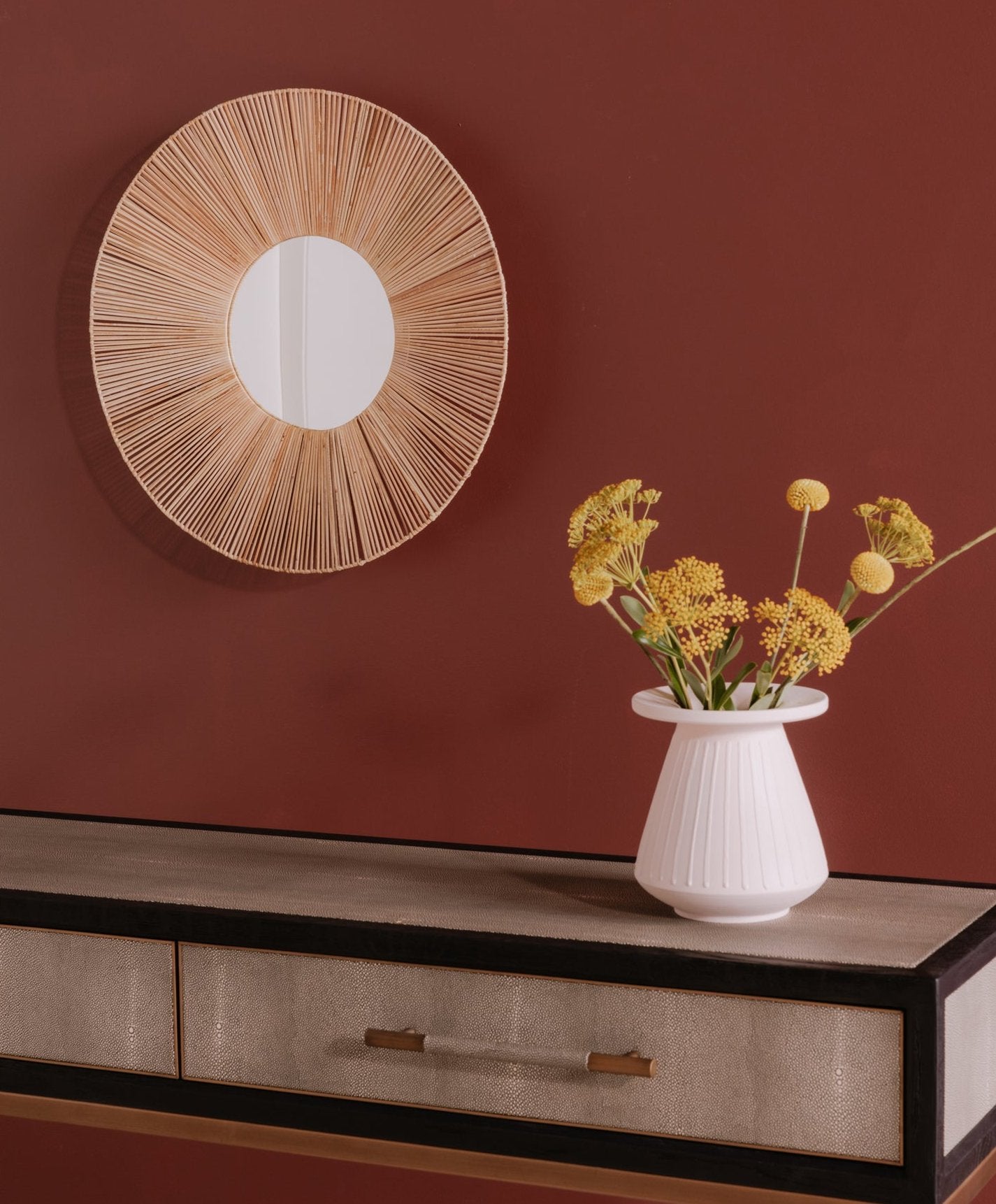
A slim console table, usually around 12 to 14 inches deep, fits behind a sofa, against an entry wall, or in a hallway without eating into the room. The smartest ones include drawers, a shelf for baskets, or a flip-up extension that turns the console into a small workspace.
Behind a sofa, it can hold a couple of lamps and a few books. By the front door, it becomes a drop zone for keys, mail, and bags. In a townhome with a narrow entry, this single piece can replace an entryway closet.
Keep in Mind: Multi-level Houston townhomes often have very narrow entryways, sometimes barely wider than the front door. A slim console with vertical hooks above it does more than a bulky bench in those spots.
9. Wall-Mounted Lighting
Floor and table lamps eat into floor and surface space. Wall-mounted sconces do the same job from a few feet up the wall, which keeps tables and floors clear. Swing-arm sconces are especially useful next to a bed or sofa, since they replace nightstand lamps entirely.
Layered lighting also makes small rooms feel bigger. A single overhead fixture flattens a room and shows every shadow. A mix of overhead, wall, and accent lights creates depth, which the eye reads as more space. Guides on using wall sconces in your home cover placement heights and how to layer fixtures across rooms without crowding the walls.
For Houston renters and townhome owners building out a modern, compact space, Modern Luxury offers a curated mix of beds, sofas, and accent pieces that are scaled and styled specifically for smaller, design-forward homes.
How to Style a Small Apartment Living Room
Furniture is only half the story. Once the big pieces are in, styling decides how the room actually feels. The goal in a small living room is balance. Enough warmth to feel like home. Not so much stuff that the room loses its breathing room.
Here is a simple approach to how to style a small apartment living room:
-
Start with one anchor color. Pick a single accent shade, like rust, navy, or olive, and repeat it in two or three places around the room. A pillow, a throw, a piece of art.
-
Use textiles to add layers. A single area rug under the sofa pulls the seating area together. Throw pillows in mixed textures, like linen and bouclé, add depth without adding clutter.
-
Hang art at eye level. Most people hang art too high. The center of any artwork should sit roughly 57 to 60 inches off the floor.
-
Add one large mirror. A mirror across from a window doubles the natural light in the room. It also makes the space read as larger by reflecting the opposite wall.
-
Edit ruthlessly. When in doubt, remove one decorative item from each surface. Small rooms look best with breathing room around objects, not packed shelves.
Decorative cushions are one of the easiest ways to refresh a small living room without committing to new furniture. A guide on styling decorative cushions on a sofa walks through how to mix sizes and patterns without making the seating area feel busy.
Fun Fact: A well-placed mirror is widely considered one of the cheapest ways to make a small room feel bigger. Designers have leaned on the trick for decades because reflected light and reflected views genuinely change how the eye reads a space.
The single best way to keep a small living room from feeling cluttered is to give every item a home. Baskets under the console. Bins in the ottoman. Storage bench at the entry. The minute things start piling on visible surfaces, even a beautifully furnished room starts to feel cramped.
Smart Furniture Ideas for Houston Townhomes With Multiple Levels
Townhomes are their own category. Most Houston townhomes built in the last 15 years stack a garage on the ground floor, the main living area on the second, and bedrooms on the third. Some add a rooftop terrace on a fourth level. Each floor has its own challenges, and the furniture has to adapt.
A few rules that help across all levels:
-
Match wood tones across floors. When the kitchen island, the dining table, and the upstairs bed share a finish, the home reads as one continuous space instead of three disconnected boxes.
-
Use the same lighting language. Black hardware on the second floor and brushed nickel on the third create a jarring shift. Pick one and stick with it.
-
Buy modular for the upstairs. Townhome staircases are notoriously narrow. A modular sofa that comes in three or four manageable pieces beats a one-piece sectional that may not fit up the stairs.
-
Lean vertical in bedrooms. Townhome bedrooms are often narrow. Tall, slim dressers store more than wide ones in the same wall space.
Rooftop or balcony spaces in Houston townhomes also benefit from compact, weather-resistant multifunctional furniture for apartments. A bistro table that folds flat against the wall when not in use opens the floor for entertaining. Built-in storage benches on a balcony hide cushions during summer storms.
Common Mistakes to Avoid With Small Apartment Furniture
Knowing what to skip is just as useful as knowing what to buy. Most small apartment furniture mistakes fall into a few predictable categories.
-
Oversized sofas. A sofa that fits the wall but blocks the walking path makes the whole room feel tight. Always measure the path, not just the wall.
-
Too many small pieces. Filling a room with five tiny chairs and three small tables creates more clutter than one well-sized sectional. Fewer anchor pieces almost always wins.
-
Mismatched finishes. Three different wood tones and two different metal finishes in one room read as visually loud. Pick one wood and one metal for the whole apartment.
-
Skipping storage. Pieces with hidden storage cost a little more upfront but save you from buying bins, baskets, and add-on shelving later.
-
Ignoring the rug. A rug that is too small floats awkwardly under the coffee table and makes the seating area look disconnected. The front legs of the sofa should sit on the rug.
-
Overhanging pendant lights too low. In rooms with 8-foot ceilings, pendants that hang too low cut the room visually in half. Most should sit 30 to 36 inches above a table or counter, no lower.
-
Forgetting walking paths. A rule of thumb is to leave at least 30 inches of clear walking space between major pieces, and 36 inches in main paths. Less than that, and the room feels like an obstacle course.
The pattern across all of these is the same. Small apartments reward restraint. Every piece needs to earn its spot, fit the scale of the room, and ideally do more than one job.
Final Thoughts
The right small apartment furniture ideas turn a tight floor plan into a home that actually feels lived in. Pick fewer pieces, scale them to the room, and lean into multifunctional designs that store, fold, or extend when you need them to. Add a tight color palette, layered lighting, and one or two pieces that genuinely make you happy to walk in the door, and even the smallest Houston apartment or townhome starts to feel intentional instead of improvised.
Compact spaces are not a limitation. They are an invitation to be a little more thoughtful about how each piece fits.
Ready to outfit your space with pieces built for modern, compact Houston living? Browse the full collection at Modern Luxury and start with the anchor piece that sets the tone for the whole apartment.
Frequently Asked Questions
How much should I spend on furniture for a small Houston apartment?
Budgets vary widely, but most people get the best results by putting the bulk of their money into the sofa and bed first, then filling in smaller pieces over time. Spending well on the two anchor pieces is almost always smarter than spreading the same budget thin across ten items.
Are sectional sofas a bad idea for small apartments?
Not at all, as long as they are scaled correctly. A compact, low-profile sectional under 100 inches on its longest side often works better than two separate chairs and a loveseat because it seats more people in less floor space. The key is matching the scale to your wall and walking paths.
Should I buy furniture before or after I move into my Houston apartment?
After, in almost every case. Photos and floor plans never match the real feel of a space, and even small differences in window placement or door swing can change which pieces fit. Spend the first week with minimal furniture and measure the actual room before ordering anchor pieces.
Is light or dark furniture better for small apartments?
Lighter finishes generally make small rooms feel more open, but a single dark anchor piece, like a charcoal sofa or walnut bed frame, can add depth without shrinking the space. The trick is balancing it with lighter walls and accents.
What is the most useful single piece of furniture for a studio apartment?
A storage platform bed or a Murphy bed usually wins, since the bed takes up the most square footage in any studio. Reclaiming that space during the day with a fold-up bed, or hiding clutter inside a storage frame, has the biggest impact on how the apartment feels overall.